
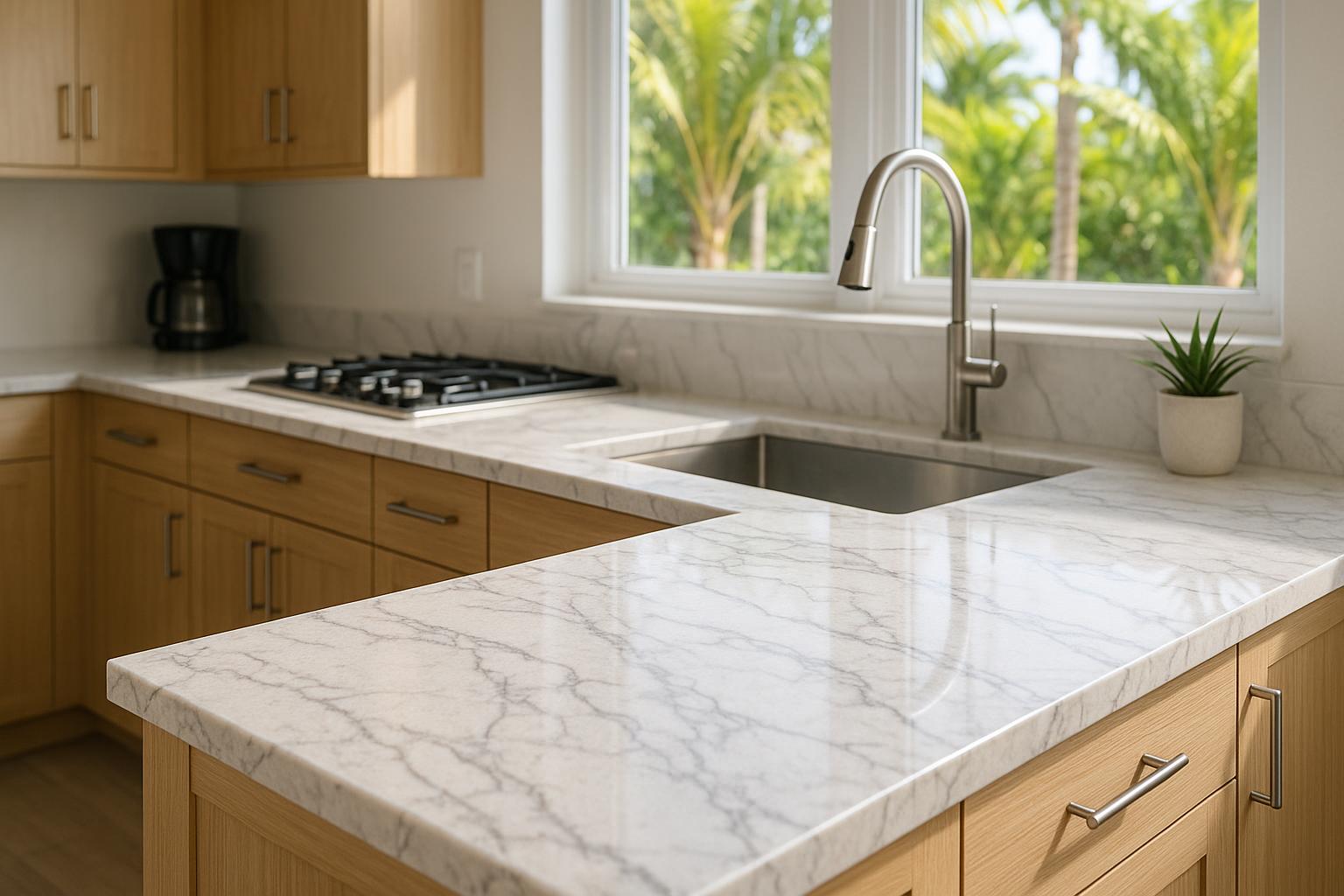
Your Countertops Are Trying to Tell You Something
Countertops are one of the hardest-working surfaces in your home. They endure hot pans, spilled coffee, chopping, scrubbing, and years of daily use. Over time, even the most durable materials start showing their age. But how do you know when a little TLC will do the trick versus when it's time for a complete countertop replacement?
It's a question we hear often from homeowners in Boynton Beach and throughout South Florida. The humidity, the heat, and the salt air can accelerate wear on certain countertop materials, making this decision even more relevant for local homeowners. Let's walk through the telltale signs that resurfacing won't be enough — and why replacing your countertops might be the best move for your home's value and your daily life.
Resurfacing vs. Replacement: What's the Difference?
Resurfacing (sometimes called refinishing or refacing) involves applying a new coating or veneer over your existing countertop. It can cover up minor cosmetic issues like surface scratches, light staining, or an outdated color. It's generally less expensive upfront and can buy you a few more years.
Replacement means removing the old countertop entirely and installing a brand-new surface — whether that's quartz, granite, marble, butcher block, or solid surface material. It's a bigger investment, but it addresses structural problems, dramatically updates your space, and typically lasts much longer.
Both options have their place. But there are clear situations where resurfacing is just a band-aid on a bigger problem.
7 Signs You Need a Full Countertop Replacement
1. Deep Cracks or Chips That Keep Getting Worse
A small chip near the edge of a granite slab might seem harmless, but cracks tend to spread over time — especially in natural stone. Once the structural integrity of the countertop is compromised, resurfacing won't fix the underlying damage. If you're noticing cracks that are growing or multiplying, replacement is the safer and more cost-effective long-term solution.
2. Persistent Staining That Won't Come Out
Laminate and natural stone countertops are both susceptible to staining, though for different reasons. Laminate can absorb liquids through worn spots in the surface layer, while unsealed or poorly sealed granite and marble are naturally porous. If you've tried every cleaning product and the stains remain, the damage has likely penetrated deeper than any resurfacing treatment can reach.
3. Warping, Bubbling, or Peeling
This is especially common with laminate countertops in South Florida homes. The combination of heat and humidity can cause the adhesive beneath the laminate to fail, leading to bubbling, peeling edges, or warped sections. Once the substrate underneath is compromised, a new layer on top won't hold properly. It's time for a fresh start.
4. Burn Marks or Heat Damage
Scorch marks from hot pots and pans are more than cosmetic. On laminate surfaces, heat damage often melts or permanently discolors the material. On solid surfaces, deep burns can compromise the finish in ways that sanding and refinishing can't fully correct. If your countertop has multiple areas of heat damage, replacement gives you a clean slate — and an opportunity to choose a more heat-resistant material.
5. The Countertop Is Separating from the Cabinets
If you notice gaps between your countertop and the cabinets below, or if the countertop feels loose or wobbly, the problem goes beyond the surface. This can indicate water damage to the substrate, failing adhesive, or even cabinet issues underneath. Resurfacing won't address any of these structural concerns. A professional replacement ensures everything is properly fitted and secured.
6. You're Already Remodeling the Kitchen or Bathroom
If you're updating your cabinets, backsplash, flooring, or fixtures, keeping old countertops can make the entire room feel mismatched. We see this frequently with Boynton Beach homeowners who invest in a beautiful kitchen remodel but try to save money by keeping their existing countertops. The result often looks incomplete. Replacing countertops as part of a larger remodel is more efficient — and it ensures a cohesive design from the start.
7. Your Countertops Are More Than 15-20 Years Old
Materials and manufacturing have come a long way. Countertops installed two decades ago — particularly builder-grade laminate — simply don't perform or look like modern options. Today's quartz surfaces are virtually maintenance-free. Modern granite fabrication is more precise and durable. If your countertops are showing their age, upgrading to a current material can transform your space and reduce ongoing maintenance.
What About the Cost?
We understand that cost is a major factor in any home improvement decision. Resurfacing might cost a fraction of replacement upfront, but consider the full picture:
- Longevity: A quality countertop replacement can last 20-30 years or more. Resurfacing typically lasts 5-10 years before it needs attention again.
- Home value: New countertops — especially quartz or granite — are one of the top features buyers look for. In a competitive South Florida real estate market, this upgrade can offer a strong return on investment.
- Maintenance costs: Older, damaged countertops often require repeated repairs. Replacing them eliminates that cycle.
When you factor in the lifespan and the value added to your home, replacement often makes more financial sense than resurfacing a countertop that's already past its prime.
Choosing the Right Material for South Florida
If you do decide to replace your countertops, the material you choose matters — especially in our climate. Here are a few popular options that perform well for Boynton Beach homeowners:
- Quartz: Non-porous, stain-resistant, and available in a huge range of colors and patterns. It handles humidity beautifully and requires almost no maintenance.
- Granite: A natural stone classic that's extremely durable when properly sealed. It resists heat well and adds timeless character to kitchens and bathrooms.
- Solid surface (like Corian): Seamless, repairable, and resistant to moisture. A practical choice for bathrooms and laundry rooms.
- Porcelain slabs: A newer option that's gaining popularity for its resistance to UV rays, heat, and staining — ideal for outdoor kitchens, which are popular throughout South Florida.
When to Call a Professional
If you're unsure whether your countertops need resurfacing or replacement, the best thing you can do is get a professional assessment. At Royal Exterior Remodeling, we inspect the full condition of your countertops — surface damage, substrate integrity, and how they fit with your overall space — before recommending any work.
We've helped homeowners across Boynton Beach, Delray Beach, Boca Raton, and the surrounding communities make smart decisions about their countertop projects. Whether it's a standalone replacement or part of a larger kitchen or bathroom remodel, we walk you through every option with honest advice and transparent pricing.
Your countertops set the tone for your kitchen and bathroom. When they're cracked, stained, or falling apart, no amount of resurfacing will give you the fresh, functional space you deserve. If any of the signs above sound familiar, it might be time to explore a replacement that truly transforms your home.